Thursday, 16 May 2013

WHY MINERAL MAKEUP?


“It looks like my skin only better.”

My answer to the question “Why Mineral Makeup?” is “Why would you wear anything else?”  The look and benefits far surpass traditional makeup.  And the category gets bigger and bigger and more inventive every day with choices from low-end to high-end and everything in between.
It does, however, get more important to examine thoroughly the ingredient list.  I had one mass brand explain to me that they put talc in their mineral makeup because it’s a mineral.  Yes, but then it’s not mineral makeup; it is traditional makeup relabeled.  Be careful of those marketing people – they’re clever!   
What minerals should you see in mineral makeup?  The quality, quantity, particle size and type differ from brand to brand, but you should see a combination of any of these ingredients:  Titanium Dioxide, Zinc Oxide, Iron Oxides, Mica, Bismuth Oxychloride or Boron Nitride.  The minerals should appear at the top of the ingredient list and not at the bottom.  (Ingredients are listed in descending order with the largest amount listed first.) 
Why is it important not to dilute minerals with fillers such as talc?  The high percentage of minerals is what provides such versatile coverage, sun protection and benefits for the skin.  This concentrated pigment also gives the mineral powder such adherence that it rarely transfers or needs touching-up.  Traditional color cosmetics contain 70 – 90% talc and are often colored with petroleum-derived dyes (FD&C or D&C). 
I should add that minerals have no relationship to mineral oil which is a liquid petrolatum, a by-product of petroleum. 
I am often asked if minerals are organic.  All substances can be divided into two categories:
a)        Organic – that which contains organs to support life and will eventually rot (humans and plants, for example)
b)        Inorganic – without the organs necessary for life (rocks, for example).
I think what people really mean when they ask me if minerals are organic is: “Are they natural?”  That’s a hard question to answer because there isn’t a satisfactory definition of “natural” in our industry.  Perhaps a better question would be: “Do they occur naturally?”  The answer to that would be “yes and no.”  There is a misconception that minerals used in mineral powders come directly from the earth.  Even if the FDA allowed that, you wouldn’t want these minerals on your skin because they would be contaminated with heavy metals and other toxins.  All minerals are manipulated extensively in a laboratory and many are made there.  This doesn’t make them bad.  They are still minerals but they are manufactured under strict laboratory guidelines that ensure their purity.
Perhaps “clean” rather than “natural” is a better word to describe products that are attempting to eliminate toxins and questionable ingredients.  Clean has been the mineral makeup pioneers’ quest from the start.  Because the category is so much more extensive than it once was, it has opened the door for compromises.  Now, you will see mineral powders with talc, parabens, synthetic dyes and other ingredients.  However, there are still a few purist brands around.  The choice is yours. 
Let’s look at what minerals are used and why.
  • Titanium dioxide (TiO2) – approved as a physical sunscreen – is a manufactured oxide of titanium.  Titanium is most commonly found in the mineral rutile (beach sand).  TiO2 is seldom used raw but is coated to eliminate oxidation and to increase its ability to refract UV rays.  Dimethicone is commonly used as a coating to increase the light scattering properties of TiO2.
  • Zinc oxide (ZnO) is manufactured from the mineral zincite.  ZnO is also approved as a physical sunscreen.  This pure white mineral is known for its anti-inflammatory and anti-microbial properties.  It remains white when exposed to UV light.
  • Mica occurs naturally but in cosmetics is a manufactured mineral which gives slip and glide to the finished product.  It can be used in a larger particle size to provide shimmer or it can be used in a much smaller particle size to render it matte and absorbent.  Mica is often used as a colorant.
  • Bismuth oxychloride is a synthetically prepared iridescent white or nearly white powder.  Its metallic sheen has led it to being called synthetic pearl.  It adds color, coverage and adhesion to the finished product. 
  • Boron nitride (BN) is a manufactured white, silky powder that gives smoothness, coverage, slip and sheen.  It is also known as the “soft focus” mineral because of its light refraction qualities.
  • Iron oxides (Fe203), commonly known as rust, are primarily used as colorants.  All iron oxides used in cosmetics are synthesized under strict laboratory processes.  Iron ore cannot be used from nature because it contains heavy metals.  
At the beginning of this article, I made the rather bold statement that the look and benefits of mineral makeup are far superior to traditional makeup.  How can I back this up?  Well, to begin with, in the fourteen years that I’ve been intimately involved with mineral makeup, I have never known a woman return to traditional makeup once she’s found a mineral brand she likes.  I’ve seen women and men with skin challenges turn their lives around because of the benefits and coverage from mineral makeup.  Celebrities become fanatical about it.   It has grown from a few pots in a plastic surgeon’s office to a world-wide phenomenon.   It is now the fastest growing segment of the cosmetic industry.
Let’s look at some specific benefits.  Authentic mineral powders are a foundation, concealer and powder all in one.  If the label indicates an SPF, they are also a sunscreen.
Coverage

It is the way mineral makeup interacts with light that creates its celebrated coverage.   It can cover almost any distraction without looking heavy and cakey.   Minerals interact with light in complicated ways: 
  • They allow light to pass through the particles so it bounces off the skin reflecting back some of the skin’s hue – literally taking on the color of the skin
  • They reflect, refract and diffuse light creating a soft focus effect
  • They create a luminous look to the skin – a healthy, youthful glow
This interaction with light makes color-matching the skin tone easier than with traditional makeup.  In fact, you will rarely see where minerals end and the skin begins.  It is important to try minerals on the skin to test for color.  Often, the color in the jar looks quite different when it is applied.
Allows the skin to breathe
Minerals allow the skin to breathe and function normally – a boon to all skin types but especially for those with acne and rosacea.
Sun Protection
There is no question that sun protection is one of the most important things we can do for the health of the skin.  The elegance of minerals is that they make this protection easy, effective and beautiful.  However, do not assume that because you have a mineral makeup in your hand that it has sun protection.  Assume the reverse unless it has an SPF rating on its label.  Mineral sun protection satisfies everything that we want a sunscreen to be.  It is part of the makeup not a separate layer.  It is non-occlusive,  There is no wait for chemicals to absorb before protection begins.  It stays where you put it – no running into the eyes.  And it is so easy to add more if you need it.
A quick word about SPF protection.  SPF only refers to protection against the UVB ray – the shorter ray that goes into the epidermis and creates a burn.  The FDA is actually considering changing SPF to SBF (sunburn protection).  Why?  Because the ray that is now considered more dangerous that UVB is UVA, the longer ray that enters the dermis and injures the collagen and elastin layers.  It also lowers the immune system.  (UVA creates the tan which is the body’s response to injury.  This is the ray that tanning booths use.)  Until now there has been no method approved in the US for testing UVA protection.  Other countries such as the UK, Australia and Japan have measured UVA for years.  The FDA has the Japanese method under consideration for approval and some labs are already conducting these tests.  It is reasonable to expect that mineral powders with an SPF rating will also have meaningful UVA protection.  Our company’s initial tests have shown this to be true.
Feel and Look
If minerals are applied properly, they should feel weightless on the skin.  Some wearers even report that for the first time in many years they can actually feel air on their faces.  If minerals feel or look heavy, it is probably an application problem and not the minerals themselves. 
Minerals are so versatile that practically any look is attainable.  But I think a phrase that I’ve heard more than any other to describe the finished effect is:  “It looks like my skin only better.”  Perhaps in the end this is what attracts women and men to mineral makeup.  It fits perfectly with today’s lifestyle.  It’s fast, easy and effective.  It’s multi-functional.  It allows us to feel natural and look flawless at the same time.  And for those of us who are interested in eliminating as many toxins as possible from our lives, it does that too.
Why mineral makeup?  Why would you wear anything else?
 Irish Mineral Makeup - Chris Krenzer Mineral Cosmetics
www.BeautyBrands.ie


Friday, 3 May 2013

Step by Step Eyebrow Filling Tutorial.


Everyone uses different brow filling methods - some swear soley by pencils, while others prefer brow powders. You may even prefer a cream product (such as a brown cream liner) or a brow-marker (such as Brow Tint Pen). I love ILAH Brow travel kit. Today, I'm going to go through one way I fill in my brows using both an eyebrow stencil and an eyebrow powder.

I don't always use both products, but I like combining both because the stencil yields a very precise, clean line, whereas the brow powder gives a softer, more natural diffused line. The result is a very clean and precise brow, yet it's not as straight/chiseled as it would be if only a pencil was used.


What the kit contains:
 Brow Kit (Blonde, Brunette, Charcoal)
 Eye shadow highlighter
 Mineral Brow wax ( also use as a lip balm)
 3 Stencils 
 Double sided Brow brush 


Here's the classic diagram of where your brows should ideally start, arch and end. Since we all have different face shapes, natural brow shapes, etc, this figure might not work for everyone. It's often referred to as the ideal brow - with the beginning of the brow lining up with the side of your nose (if you hold a pencil vertical to your nose, it should line up with the beginning of your brows). But depending on the symmetry of your nose, placement of the eyes (if they are very far apart for instance), etc, this method may not work. Instead, I use the "Paris" stencil. Three stencils come in this kit and they fit over 98% of eye shapes ! 


Thanks !!


Tuesday, 9 April 2013

8 best ways to lose your belly fat


A common question is how successfully to get rid of stomach fat quickly. Who doesn’t want flat stomach? Around 70% of USA and Europe adult population is not happy with their weight and most of them would like to lose belly fat altogether. It has been scientifically explained! High level cortisol in our body is one of the main culprits to gain weight in our stomach area. Due to stress, cortisol secretion is increasing. The good news is achieving belly fat is not as difficult as most of the people think. Here are 7 best ways to lose your stomach fat in no time!
1. Sleep enough!
At least 8 hours of sleep needed of your body to recover from daily stress load
2. Forget about alcohol
Alcohol is calorie. Drink a glass of wine with dinner and you will feel the button of his jeans cuts in your belly. Reduce the alcohol to a bare minimum to have a strong stomach and a beautiful flat belly.
3. Avoid Soda
Instead of soda, drink more water, green tea and fruit juices without artificial sweeteners.
You will feel more comfortable and your stomach will be swollen.
4. Cut out fast food and sugar
Carbs hold water and that your belly swells. It’s easy to eat 1,000 grams or more carbohydrates weekend; just a pizza, a few drinks and dessert, than these carbs can easily lift a pointer on the scales of up to 2 kg on Monday.
5. Drink much water with lemon
Giving up sparkling, opt for plain or mineral water with some lemon in it. Lemon helps digestion and is a natural diuretic, so earning excess water from the body.
6. Vitamin C
When you’re under stress, cortisol secretion is extremely high Vitamin C helps balance the cortisol levels in your body
7. Doing bearing exercises
Exercises like crunches and all other related abdominal muscles are the best effective method of getting flat tummy and shaping the so-called 6 “tiles”.
8. No supplements and fat burners
You don’t need to spend money on expensive supplements and fat burners. You must use the natural power of food and sports to achieve the desired flat stomach

Monday, 25 March 2013

Attract More Clients to your Salon


“How can I find out if a new treatment will attract new clients and / or be popular with existing clients?”


Getting new customers and keeping the old ones can be a hard task. There are always salons who will offer great incentives to new customers that will end up stealing your customers. You have to make sure you treat your current customers with respect, keep your prices competitive, and give incentives to stay with you.

In order to attract new customers make sure your salon offers a competitive new rate for new customers. Create an advertising campaign that includes a lot of different types of advertising.
To help keep your customers, give them a discount for being with them for a long time. When a customer stays with a Salon for a while, they begin to feel loyalty to it. They will want to stay with the salon because of that bond. However, they will leave if it means a lot less money they have to pay. Give your existing customers incentives too.

It may not seem that important to keep the old customers when you can just get new ones and they will eventually just come back to you, but it is actually really beneficial. Customers who have been with the company are loyal to you. They are also more willing to work with you if something goes wrong.
 
Improve Training for all Therapists
Employees who have daily interaction with customers often leave a lasting impression

Provide Timely Responses
We all know demanding it can be running a Salon especially if you don’t have a receptionist. Try moving your clients to booking appointments online via your website, email or Facebook. This will give to time to respond

Offer More Proactive Ideas
As a beauty service and product supplier, customers look to you as the expert. They rely on you to perform important tasks they cannot do themselves. Give tips and trick via socail networking sites on how clients can maintain their treatments

Social Networking
Have your client write a testimonial for your on a Social Networking site. A person who does business with you becomes a great advertising tool for your business. A satisfied customer will spread the word about your business, which will eventually attract new clients for your business.
With this in mind, you must be sure to provide excellent customer satisfaction, so that it creates a domino effect of new clients to your business.


New Treatments  / New products :

Ilah Brows is a superb treatment that makes great business sense. Clients want the ILAH Brow look –they’ve seen it in the media, and are asking for it in salons. Demand for training is growing by the day and we are the ONLY Provider of official ILAH Brow training in Ireland.


Thanks for reading  :)


Friday, 15 March 2013

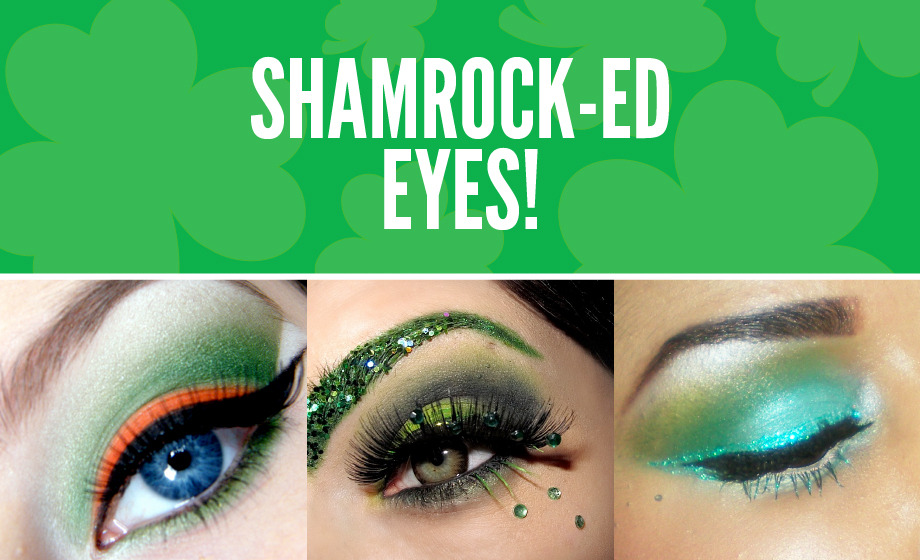
St. Patrick’s Day Makeup Ideas


St. Patrick’s Day is fast-approaching! Leprechauns, shamrocks, and pots of gold abound, but we're totally stoked about the makeup! The Irish festival gives the green light on all things emerald, but don't feel limited to one color or style—myriad looks exist for every skin tone imaginable. And you bet your lucky charms we've rounded up our community favorites. Try these St. Paddy's day makeup looks and you're guaranteed a pinch-proof celebration!


EIMEAR B.
Take St. Patty's makeup inspiration from a true Irish Beauty herself. Eimear (left) goes the patriotic route by teaming up an emerald green crease with a pop of ginger on the lid. A sharp black wing finishes with a color-blocked white accent, giving this Northern UK eye a retro-modern feel.
HEIDI L.
Heidi gives Chanel's bedazzled brow trend a verdant twist! In her playful take on a smoky eye (center), she pairs a clear lime hue with a cool khaki—lime's grungier sister—in the crease. Sky-high falsies and matching rhinestones finish the look.
STEPHANIE L.
Looking for a vibrant pastel eye to celebrate the merry occasion? Try Stephanie's glittering aqua-jade eye (right)—just look at her blending, the colors, and her luminescent skin! It's Emerald City, reinvented.

Tuesday, 5 February 2013

Contouring is an Art


I’d talk about the art of contouring. What is contouring you may ask? Contouring is essentially the opposite of highlighting. While highlighting is meant to accentuate features in your face, contouring is meant to minimize features by darkening areas. Contouring is a great way to make your face look thinner and more structured.


To contour, you can use a contour brush, sponge, or your own fingers. Then you would either need a bronzer, liquid or powder foundation, or I have heard some people use eye shadow. Whatever your choice, you must choose a shade only slightly darker than your skin tone; maybe only two or three shades darker. Any darker will make your contouring look unnatural. The usual areas to contour are on the sides of your nose, under your cheekbone, on the sides of your forehead, and under your neck, if necessary.


Darkening the sides of your nose makes your nose look thinner. Darkening under your cheekbones gives the appearance of hollowed cheeks, which makes your cheek bones look more prominent. Contouring the sides of your forehead makes your forehead look thinner, and darkening under your neck makes your neck look thinner as well. 

When using liquid foundation, it would be best to use a sponge or finger tips. You would really need to blend the foundation into your face in the areas needed, so the areas look like they are in the shadow. If you use eye shadow or powder based foundation  to contour, you should use a contouring brush. If you need help finding a good contouring brush, MAC #168 has great reviews. Since there are both liquid and powder kinds of bronzer, you should use either liquid or powder methods to apply the bronzer. Here are pictures of Kim Kardashian before and after her makeup routine, which happens to include both highlighting and contouring.
Before

Contouring definitely takes a lot of practice, but with enough practice, your face will be ready for the cover of any magazine! I hope my tips helped, until next time!


After

Applying Foundation: Fingers or Brushes?


Applying Foundation: Fingers or Brushes?

When applying foundation, what do you usually do? Do you blend directly with your fingers or do you use tools, like brushes or sponges? 
Let's take an in-depth look at these two different techniques for applying your face makeup. 


              Fingers              Brushes


Fingers      

Why it works:
  • The natural heat of your body allows the makeup to melt in your hands.
  • Many members agree that using your fingers is more precise.
  • Brushes cost money, but your fingers are free! No splurging on expensive tools.

Why you should avoid it:
  • If you don't wash your hands, using your fingers can spread bacteria to the face.
  • Even if you do wash your hands, fingers still spread oils around that lead to acne.
  • Finger application can be messy - watch out for stained hands!


Brushes
Why it works:
  • With so many brush types, you can experiment for the perfect finish.
  • Having a brush set allows you to apply makeup on friends without the germs.
  • Brushes (and sponges) usually give a lighter, less caked-on finish.

Why you should avoid it:
  • Brushes and sponges are absorbent, so you might waste more product.
  • Without proper cleaning, these tools will be full of bacteria and dead skin cells.
  • Makeup brushes and sponges can be expensive if you're a newbie. 


Final verdict:  Both techniques have the same number of pros and cons, so there's no clear answer as to which is the best. Experiment and find what works best for you. You might find, for example, that brushes are better for powders while fingers are better for liquids.

No matter which technique you use, though, make sure you keep your tools (whether they're attached to your body or not!) clean before makeup application. Brushes should be washed at least once a week with brush cleanser, and your make sure you wash your hands before rubbing on product.


Recommended Products:
  • MAC #190 Foundation Brush
  • Chris Krenzer 24 piece Synthetic Brush Set
  • NIMA Brushes
  • e.l.f. Studio Brush Cleaner